




Advanced AI-Powered OCT at Mar Sleeva Medicity Palai


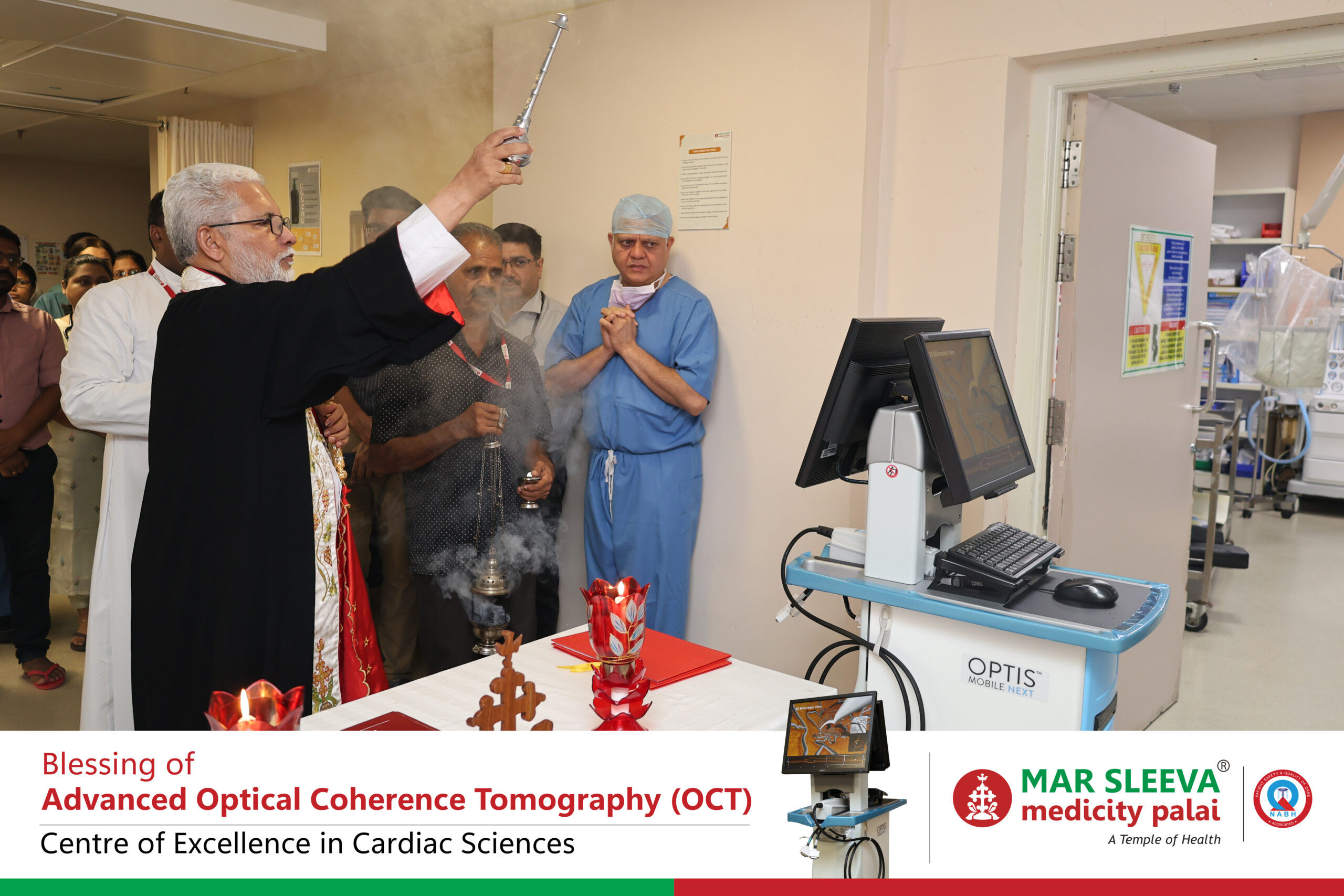
Mar Sleeva Medicity Palai is one of the few hospitals in Kottayam and central Kerala to offer AI powered Optical Coherence Tomography (OCT) using the latest Abbott Ultreon 2.0 intravascular imaging system. OCT guided angioplasty allows interventional cardiologists to see inside coronary arteries with around ten times more detail than a conventional angiogram, plan the procedure with artificial intelligence support, and place stents with millimetre level accuracy.
What is Optical Coherence Tomography (OCT) in cardiology
Optical Coherence Tomography is a light based intravascular imaging technology used during coronary angioplasty. A miniature OCT catheter is advanced into the coronary artery and uses near infrared light to produce a high resolution cross sectional view of the inside of the vessel in real time. Unlike a standard coronary angiogram, which only shows the outline of the artery filled with contrast dye, OCT reveals what is actually present inside the artery wall: the plaque, the calcium, the layers of the vessel, and the position of any stent that has been placed.
OCT has become the gold standard for intravascular imaging in complex coronary intervention because of its very high resolution, fast pull back speed, and clear visualisation of stent struts after deployment. International guidelines now recommend intravascular imaging guided angioplasty in complex cases such as left main disease, calcified arteries, long lesions, and bifurcations.
Abbott Ultreon 2.0: the latest generation of AI guided OCT
Ultreon 2.0 is Abbott’s latest OCT software platform. What makes it different from earlier OCT systems is the artificial intelligence layer built directly into the imaging workflow. The AI does not replace the cardiologist. It works alongside the team in real time to remove guesswork from three of the most critical decisions in coronary stenting: how much calcium is present, how wide the artery actually is, and what size of stent will fit best.
How AI guided OCT works during angioplasty
OCT is performed during the same procedure as the angioplasty, through the same catheter pathway. The patient does not need a separate procedure or a separate hospital visit.
- Diagnostic angiogramThe cardiologist first performs a routine coronary angiogram to identify the blocked artery and the lesion of interest.
- OCT catheter advancementA thin OCT imaging catheter is advanced through the existing guide catheter to the site of the lesion.
- High speed pull back imagingThe OCT system performs an automated pull back, capturing a complete high resolution image of the artery in seconds.
- AI assisted lesion analysisUltreon 2.0 automatically analyses calcium burden, measures the reference vessel diameter, and identifies the optimal landing zones for the stent.
- Stent selection and placementGuided by the AI output, the cardiologist chooses the most appropriate stent length and diameter, and places it with co registered angiogram and OCT views on a single screen.
- Post stent verificationA second OCT pull back confirms full stent expansion, good apposition against the vessel wall, and absence of edge dissection, all of which influence long term outcome.
Patients who benefit most from OCT guided angioplasty
While OCT can be used in any coronary intervention, it adds the most value in complex cases where standard angiography alone may not give the full picture. The interventional cardiology team at Mar Sleeva Medicity Palai uses OCT in the following settings.
Diabetic patients
Diabetes accelerates and complicates coronary artery disease. OCT helps quantify true plaque burden in diabetic vessels and choose the right stenting strategy.
Elderly patients
Older arteries often carry calcium, tortuosity, and complex anatomy. OCT gives a clear internal view that supports safer decisions at every step.
Heavily calcified arteries
AI driven calcium detection identifies how much calcium is present and exactly where, helping decide whether vessel preparation tools are required before stenting.
Multi vessel coronary disease
When more than one major artery is involved, OCT helps prioritise lesions, optimise stent length, and reduce the chance of incomplete revascularisation.
Left main and bifurcation lesions
Lesions at branch points and at the left main are technically demanding. OCT confirms stent position across the side branch and main vessel with sub millimetre clarity.
In stent restenosis and prior stent issues
For patients with restenosis, stent thrombosis, or unclear symptoms after a previous stent, OCT pinpoints the exact mechanism so the right corrective step can be taken.
Long and tandem lesions
Accurate length measurement avoids geographic miss and reduces the chance of needing a second stent later.
Acute coronary syndromes
OCT can identify plaque rupture, erosion, or calcified nodule as the underlying cause, which directly influences treatment.
What the AI in Ultreon 2.0 actually does
The artificial intelligence in Ultreon 2.0 turns intravascular imaging into a decision support tool, not just a viewing tool. It performs four core tasks in real time.
Benefits of AI guided OCT angioplasty
Compared with angiography alone, OCT guided coronary intervention is associated with several measurable benefits.
- More accurate assessment of lesion length, vessel size, and plaque type
- Better identification of calcified lesions that need vessel preparation
- More precise stent sizing and positioning
- Higher rates of optimal stent expansion and apposition
- Lower rates of in stent restenosis and stent thrombosis
- Reduced likelihood of repeat revascularisation procedures
- Faster, more confident decision making in complex cases
Cardiac sciences at Mar Sleeva Medicity Palai
Ultreon 2.0 OCT is part of a complete cardiac sciences ecosystem. The hospital offers quaternary level cardiac care under one roof for patients across Kottayam, Idukki, Ernakulam, and Pathanamthitta.
- 24×7 cath lab with experienced interventional cardiology team
- Cardiac ICU and dedicated cardiac surgical theatres
- Non invasive cardiology including echocardiography, stress testing, and Holter monitoring
- Cardiothoracic and vascular surgery for cases that need surgical revascularisation
- Critical care, nephrology, and neurology back up for patients with multi system involvement
- 24×7 emergency department for acute chest pain and heart attack response
Why patients in Kottayam choose Mar Sleeva Medicity Palai for advanced cardiac care
Coronary angioplasty outcomes depend heavily on how well the lesion is understood before a stent is placed and how well that stent is positioned afterwards. By offering AI guided OCT alongside a full quaternary cardiac team, Mar Sleeva Medicity Palai brings a standard of interventional cardiology to central Kerala that patients previously had to travel long distances for. For patients in Kottayam district and surrounding areas, advanced coronary imaging is now available close to home.
Frequently asked questions about OCT guided angioplasty
What is OCT imaging in cardiology?
Optical Coherence Tomography is a light based intravascular imaging test used during coronary angioplasty. A small OCT catheter inside the coronary artery uses near infrared light to produce a high resolution cross sectional image of the artery wall, showing the plaque, calcium, and stent position in real time.
How is OCT different from a coronary angiogram?
An angiogram shows the outline of a coronary artery using contrast dye and X ray. OCT shows what is actually present inside the artery wall in roughly ten times more detail. Angiogram answers where the blockage is, OCT answers what the blockage is made of and how to treat it.
Is OCT guided angioplasty safe?
OCT is performed during the same cath lab procedure as the angioplasty, through the same catheter pathway already in use. It does not add a separate puncture or significant additional time. Safety is comparable to standard angioplasty when performed by an experienced interventional cardiology team.
Why does AI matter in coronary imaging?
AI removes variability from measurements that have traditionally been manual and operator dependent. In Ultreon 2.0, AI detects calcium, measures vessel diameter, and supports stent sizing in real time, which leads to more consistent stent placement and better long term outcomes.
Who needs OCT during angioplasty?
OCT is most useful in diabetic patients, elderly patients, calcified arteries, multi vessel disease, left main and bifurcation lesions, in stent restenosis, and acute coronary syndromes. The decision is made by the interventional cardiologist based on the angiogram findings and clinical history.
Does OCT reduce the chance of needing a repeat procedure?
Yes. Better lesion assessment and more accurate stent placement, both supported by OCT, are associated with lower rates of in stent restenosis and stent thrombosis, which means fewer repeat interventions over time.
Where can I get AI guided OCT angioplasty in Kottayam or Kerala?
Mar Sleeva Medicity Palai offers AI guided OCT using the Abbott Ultreon 2.0 platform, integrated with its 24×7 cath lab. Patients in Kottayam, Idukki, Ernakulam, and Pathanamthitta can access this technology without travelling to a metro centre.
Will my insurance cover OCT guided angioplasty?
Most major health insurance providers and corporate panels cover medically indicated OCT guided angioplasty as part of the angioplasty procedure. The hospital insurance desk will assist with pre authorisation and clarify what is covered under your specific policy.
How do I book a cardiology consultation at Mar Sleeva Medicity Palai?
You can book an appointment with the cardiology team by calling 04822 359 900 or 354 900 or 269 700, or by visiting www.marsleevamedicity.com. Walk in consultations and emergency cardiac care are also available.