Book an Appointment

Comprehensive Antivenom Treatment Centre

16 February 2022
Comprehensive Antivenom Treatment Centre
16 February 2022

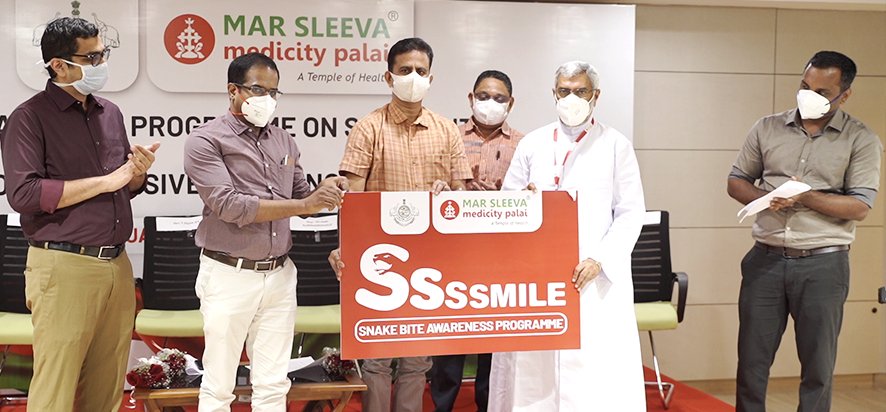
The Comprehensive Antivenom Treatment Centre at Mar Sleeva Medicity Palai is a dedicated, round the clock unit that brings together emergency care, polyvalent antivenom availability, intensive care, dialysis, ventilator support and specialist backup under one roof. Designed for the high snake bite burden of central Kerala, the centre treats every bite as a time critical emergency.
Why a dedicated antivenom centre matters in Kerala

According to the ICMR Million Death Study, India records an estimated 58,000 snake bite deaths every year, the highest in the world. Kerala, with its dense plantation belts, paddy fields and Western Ghats foothills, sits in a high incidence zone. Kottayam, Idukki and Pathanamthitta districts together report a steady volume of envenomation cases each monsoon, and the difference between full recovery and a fatal outcome often comes down to two things: how quickly the patient reaches a hospital with antivenom in stock, and whether that hospital can manage the complications that follow.

Time matters more than anything else. A patient who reaches a properly equipped centre within the first hour has dramatically better outcomes than one who is delayed by traditional remedies, transfers between facilities, or hospitals without antivenom or critical care.

What the Comprehensive Antivenom Treatment Centre offers

A snake bite is rarely just a wound to be dressed. Severe envenomation can trigger kidney failure, respiratory paralysis, internal bleeding or compartment syndrome within hours. The centre is built to manage all of these in parallel, without transferring the patient to another facility.

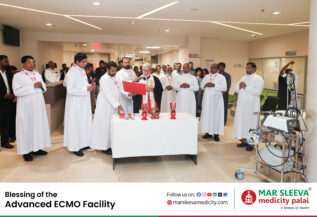
ECMO support

Extracorporeal Membrane Oxygenation available for severe respiratory or cardiac failure that does not respond to ventilation.

Round the clock Emergency

Resuscitation, airway management and immediate ASV initiation on arrival.

Polyvalent ASV stocked

Indian polyvalent antivenom maintained against the Big Four, with replenishment protocols.

DM led Intensive Care

ICU led by a DM critical care specialist with experienced intensivists and nurses, running twenty four hours.

Ventilator Support

Invasive and non invasive ventilation for neurotoxic bites that progress to respiratory paralysis.

CRRT and Haemodialysis

Continuous Renal Replacement Therapy for haemodynamically unstable patients with acute kidney injury, alongside conventional dialysis.

Multi organ failure management

Integrated care for envenomation that affects kidneys, coagulation and the cardiovascular system simultaneously.

Neurology backup

For krait and cobra envenomation with neuromuscular complications.

Plastic and Reconstructive Surgery

For tissue salvage, wound debridement and management of compartment syndrome.

Blood Bank on site

Immediate access to blood products for hematotoxic envenomation.

Snake bite is a medical emergency

Do not wait for symptoms to worsen. Reach the hospital as fast as possible.

Emergency: +91 82816 99242 Enquiry: 04822 359 900

Snake bite first aid: what to do, what not to do

The minutes after a bite are decisive. Most preventable deaths from snake bite in India are linked not to the venom itself, but to delays caused by traditional remedies and incorrect first aid. Follow these evidence based steps.

Do
  • Stay calm and reassure the victim. Panic increases venom spread.
  • Move the person away from the snake to prevent a second bite.
  • Immobilise the bitten limb with a splint, the way you would treat a fracture.
  • Remove rings, watches, bangles and tight clothing near the bite before swelling begins.
  • Note the time of the bite and any symptoms as they appear.
  • Take a photograph of the snake from a safe distance only if it is easy and safe to do so.
  • Reach the nearest hospital with antivenom as quickly as possible.
Don’t
  • Do not apply a tourniquet. It can cause loss of the limb without slowing the venom.
  • Do not cut, slash or suck the wound.
  • Do not apply ice, snake stones, herbal pastes or chilli powder.
  • Do not give the victim alcohol, coffee or stimulants.
  • Do not try to catch or kill the snake. Identification is helpful but not worth a second bite.
  • Do not visit a traditional healer first. Hours lost are lives lost.
  • Do not assume the bite is harmless because there is no immediate pain. Krait bites can feel painless at first.

Why Mar Sleeva Medicity Palai for snake bite emergencies

Mar Sleeva Medicity Palai is a 690 bed quaternary care hospital with over 200 doctors and 60 plus specialties working under one roof. For a condition like envenomation, where complications can come from any organ system, having every specialist accessible without inter hospital transfer is the single biggest determinant of outcome.

The Antivenom Treatment Centre operates as an integrated workflow: emergency triage starts ASV at the bedside, the medical intensive care team takes over for monitoring and life support, nephrology steps in for dialysis if kidneys fail, neurology and pulmonology manage paralysis and ventilation, and plastic surgery handles tissue complications. The blood bank, laboratory and radiology run twenty four hours, so coagulation panels, kidney function and imaging are never bottlenecks.
Frequently asked questions

What makes the Comprehensive Antivenom Treatment Centre different from a regular emergency room?
A general emergency room can start antivenom, but a snake bite often progresses into kidney failure, respiratory paralysis or bleeding complications within hours. The Comprehensive Antivenom Treatment Centre keeps polyvalent ASV in active stock, runs an integrated protocol with intensive care, nephrology, neurology and plastic surgery, and has dialysis, ventilator support and blood products available on site. The patient does not have to be transferred mid treatment.
Is the Indian polyvalent antivenom effective against every snake bite in Kerala?
The Indian polyvalent ASV is raised against the Big Four: Russell’s viper, saw scaled viper, common krait and spectacled cobra. It is highly effective against these. Kerala also sees frequent bites from the hump nosed pit viper, against which polyvalent ASV is not reliably effective. The centre manages such cases with intensive supportive care, dialysis where needed, and close monitoring of clotting and kidney parameters.
How quickly should a person reach the hospital after a snake bite?
As fast as physically possible. There is no safe waiting period. The first hour is often called the golden hour because antivenom given early can prevent the cascade of bleeding, paralysis or kidney injury that becomes much harder to reverse later. Even if the bite seems minor or painless, the patient should be brought in for assessment.
What if it is unclear whether the snake was venomous?
Treat every snake bite as potentially venomous until a doctor confirms otherwise. Up to half of all venomous bites are dry bites with little or no envenomation, but this can only be determined by clinical observation and blood tests over a few hours. Self diagnosis based on the look of the wound is unreliable and dangerous.
Will every snake bite patient need ICU admission?
No. Patients with confirmed dry bites or mild envenomation are often managed in the observation unit. ICU admission is reserved for patients with active bleeding, neurotoxic features such as drooping eyelids or breathing difficulty, falling kidney function, or those needing repeated ASV doses. The decision is made by the treating team based on continuous monitoring.
Can the centre manage acute kidney injury and respiratory paralysis from a snake bite?
Yes. The Department of Nephrology provides immediate haemodialysis for acute kidney injury caused by Russell’s viper and hump nosed pit viper bites. The Department of Pulmonology and Critical Care Medicine provides ventilator support for neurotoxic bites from kraits and cobras. Both run round the clock, which is why complicated envenomation cases do not need to be referred elsewhere.
Are children, pregnant women and elderly patients treated differently?
The same antivenom is used across age groups, since the dose is determined by the venom load, not the patient’s body weight. However, monitoring is more intensive in children, pregnant women and the elderly because complications can develop faster. The centre coordinates with paediatrics and obstetrics where needed to ensure safe management.
What follow up care is needed after antivenom treatment?
Patients are typically reviewed for delayed serum sickness, kidney function recovery, wound healing and any residual neurological symptoms. Follow up usually includes blood tests within the first week, a clinical review at two to four weeks, and longer term monitoring of kidney function for patients who developed acute kidney injury. The team schedules these visits before discharge.
Sources: World Health Organization (WHO) Guidelines for the Management of Snakebites, South East Asia Region (2nd edition). Indian Council of Medical Research (ICMR) Million Death Study on snakebite mortality in India. Government of India National Snakebite Management Protocol. Information here is for awareness and does not replace professional medical advice. In any suspected snake bite, reach the nearest equipped hospital immediately.
Affordable Treatment

Affordable Treatment

We provide the most affordable treatment in the health sector.

Holistic Care

Holistic Care

Full-fledged Modern medicine, Ayurveda and Homoeopathy under one roof

Critical Medical Care

Critical Medical Care

Critical medical care for people who have life-threatening injuries and illnesses.