




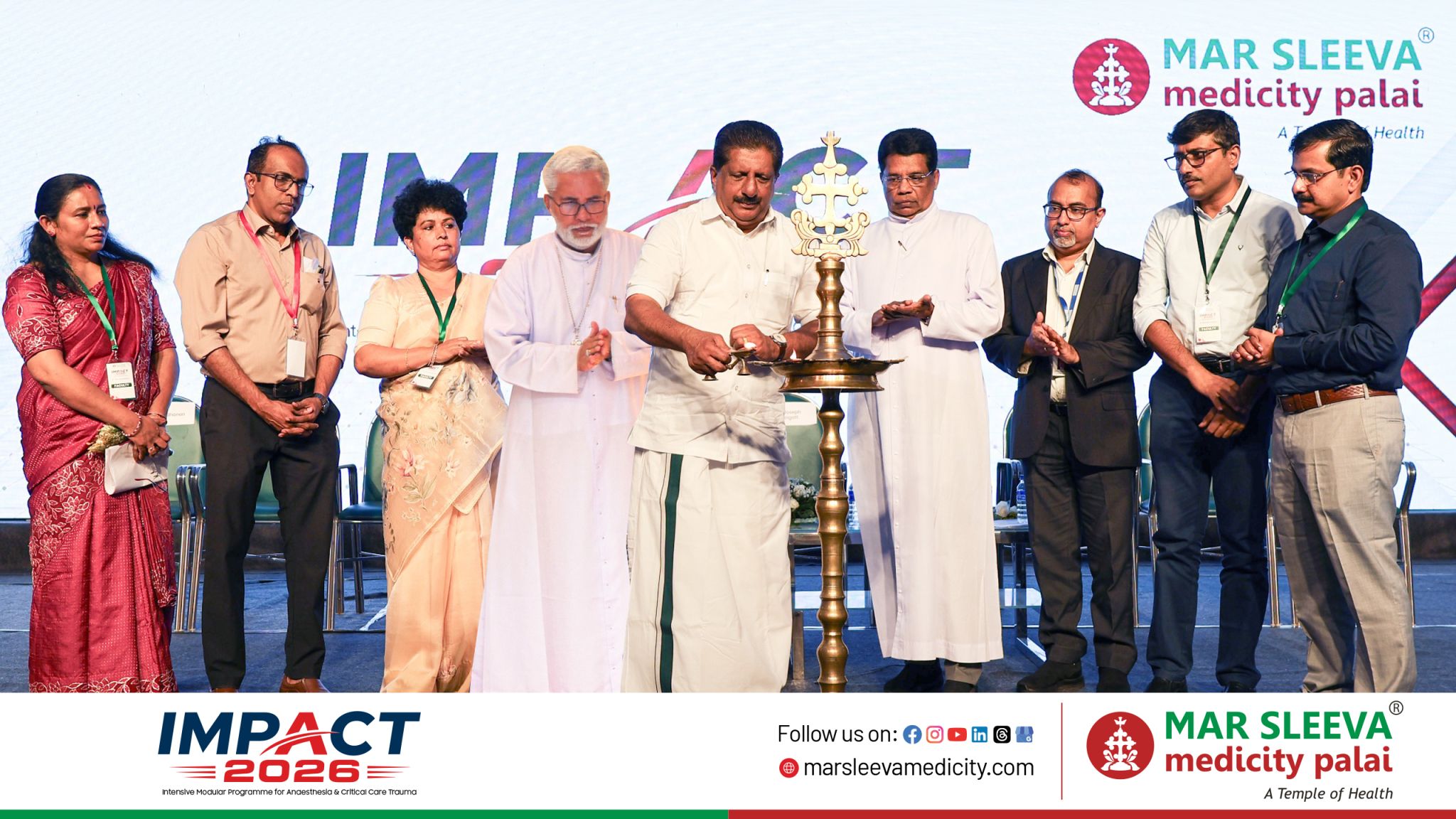
Mar Sleeva Medicity Palai hosted IMPACT 2026, an intensive modular CME on Anaesthesia, Critical Care and Trauma, organised by the Department of Anaesthesiology & Perioperative Medicine on 6 September 2026. The programme brought together doctors and clinical professionals from hospitals and medical institutions across India for a day of case-based learning, expert-led discussions, multidisciplinary exchange and practical skills training in contemporary trauma and critical care.
Designed around the theme “From Impact to Recovery”, IMPACT 2026 moved beyond a conventional lecture-based CME. The scientific programme followed the clinical journey of a severely injured patient — from trauma resuscitation and airway management through haemodynamic stabilisation, haemorrhage control, interventional procedures, anaesthesia, intensive care, pain management and recovery.
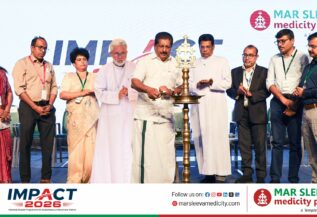
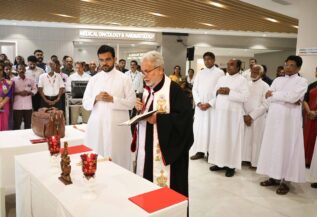
The programme was inaugurated by Shri Mons Joseph, Minister for Irrigation, Government of Kerala, with Mar Joseph Kallarangatt, Bishop of the Diocese of Palai, presiding over the function. The CME was organised by the Department of Anaesthesiology & Perioperative Medicine at Mar Sleeva Medicity Palai as part of the hospital's continuing commitment to clinical education, multidisciplinary practice and professional development.
A CME built around real clinical decisions
Trauma and critical care frequently demand rapid decisions with incomplete information. The first minutes may involve simultaneous airway compromise, respiratory failure, haemodynamic instability, occult bleeding and multiple traumatic injuries. IMPACT 2026 was structured around these real clinical challenges rather than around isolated textbook topics.
Each module examined a different stage of trauma management, combining short focused presentations with question-and-answer sessions, multidisciplinary discussion, practical ultrasound training and case-based learning. The programme brought together perspectives from anaesthesiology, critical care medicine, general surgery, orthopaedics, obstetrics and gynaecology, interventional radiology and other specialties involved in the care of critically injured patients.
From scene to survival: trauma resuscitation and airway
The scientific programme opened with “From Scene to Survival – Trauma Resuscitation & Airway”, focusing on the immediate priorities in a severely injured patient.
Sessions included updates from the 11th edition of ATLS, approaches to the traumatic airway and ventilation strategies in chest trauma. The module examined how clinicians can establish priorities rapidly when airway, breathing and circulation are simultaneously threatened.
Saving lives before definitive repair
The second module, “Saving Lives Before Definitive Repair”, moved into the physiology of major trauma and the principles required to stabilise critically injured patients before definitive surgical repair.
The sessions covered the approach to the hypotensive trauma patient, damage-control resuscitation and haemostatic precision resuscitation, including discussion of the potential role of TEG and ROTEM in evaluating coagulation and guiding resuscitation in appropriate trauma settings.
From shock to stability
The third module, “From Shock to Stability”, examined the multidisciplinary management that follows initial trauma resuscitation.
Discussions included the role of interventional radiology in trauma, critical-care principles in polytrauma and precision analgesia for the trauma patient. The sessions reflected the increasingly integrated nature of modern trauma care, where surgery, interventional procedures, anaesthesia and critical care may need to work in parallel.
Hands-on POCUS: from probe to bedside decision
A major component of IMPACT 2026 was the dedicated POCUS Workshop. Unlike a purely theoretical ultrasound lecture, the workshop was organised as practical hands-on training designed around applications relevant to anaesthesia, emergency medicine, trauma and critical care.
Participants moved through five practical stations, receiving guided exposure to focused ultrasound applications that can support rapid bedside assessment and decision-making.
Focused ultrasound assessment used in trauma evaluation for suspected internal bleeding and related thoracoabdominal findings.
Bedside ultrasound applications for assessment of thoracic pathology and respiratory compromise.
Focused cardiac ultrasound for rapid bedside assessment in selected critically ill patients.
Ultrasound-guided regional anaesthesia techniques with emphasis on practical procedural anatomy.
Focused vascular ultrasound applications for bedside assessment of venous pathology.
The POCUS faculty included clinicians from Mar Sleeva Medicity Palai and other institutions including GG Hospital Thiruvananthapuram, Lisie Hospital Kochi, Government Medical College Kollam, Neyyar Medicity and Baby Memorial Hospital, creating an interactive learning environment across different clinical settings.
Can POCUS replace routine initial imaging in trauma?
IMPACT 2026 also addressed the practical question of where bedside ultrasound fits within the wider trauma-imaging pathway through a dedicated Pro-Con discussion on whether POCUS can replace routine initial radiological imaging in trauma.
The discussion encouraged clinicians to examine both the strengths and limitations of POCUS, including its value for rapid bedside assessment and its place alongside appropriate definitive imaging rather than as a blanket replacement for other diagnostic modalities.
Two lives at stake: multidisciplinary obstetric trauma
One of the most distinctive sessions at IMPACT 2026 was the multidisciplinary panel discussion on “Two Lives at Stake – Obstetric Trauma.”
The discussion explored trauma during pregnancy, including pelvic trauma, maternal and fetal priorities and the need to coordinate decision-making between multiple specialties. The panel brought together expertise from Orthopaedics, Obstetrics & Gynaecology, Interventional Radiology, General Surgery and Critical Care Medicine.
Redefining trauma care: hybrid ORs, AI and robotics
The afternoon scientific programme looked at technologies changing the way major trauma may be managed. The “Redefining Trauma Care” module discussed the role of the Hybrid Operating Room, the emerging role of Artificial Intelligence in trauma care and the increasing use of robotics in trauma surgery.
Case clinic: learning from complex trauma
The final scientific module, “Trauma Clinic – Case Based Trauma Management,” used real-world clinical scenarios to examine how difficult trauma cases are approached when several competing physiological and logistical challenges arise simultaneously.
Presented by Dr. Liby G Pappachan & PGs · Mar Sleeva Medicity Palai
Complex perioperative decision-making in a patient with significant comorbidity · MCH Kottayam
Competing priorities in polytrauma · MOSC Medical College, Kolenchery
Management of the unstable neck · Al Azhar Medical College, Thodupuzha
A platform for national clinical exchange
IMPACT 2026 brought together specialists and clinicians from different hospitals and medical institutions, creating an academic platform that extended beyond a single department or institution.
Faculty and participants represented centres including Mar Sleeva Medicity Palai, Government Medical College Kottayam, Government Medical College Thrissur, Government Medical College Kollam, Amrita Hospital Kochi, Aster Medicity Kochi, Believers Church Hospital, Pushpagiri Hospital, Lisie Hospital, Baby Memorial Hospital and Neyyar Medicity, among others.
This cross-institutional participation allowed the programme to combine different experiences of trauma systems, anaesthesia practice, critical care, surgery, interventional procedures and bedside ultrasound.
Anaesthesia and perioperative medicine at Mar Sleeva
For Mar Sleeva Medicity Palai, IMPACT 2026 was an extension of the clinical and academic environment in which the Department of Anaesthesiology & Perioperative Medicine works every day.
Anaesthesia and perioperative medicine intersects with virtually every major surgical and critical-care pathway in a quaternary-care hospital. Patients requiring complex trauma surgery, advanced orthopaedic procedures, cancer surgery, gastrointestinal and hepatobiliary surgery, urological procedures, neurosurgery, cardiac intervention and critical care depend on coordinated perioperative teams.
This makes continuing professional education particularly relevant to the hospital. IMPACT 2026 brought the department's clinical environment into an academic forum, connecting the practical realities of complex patient care at Mar Sleeva with current approaches being discussed and practised across institutions.
Continuing medical education at Mar Sleeva Medicity Palai
The organisation of a national CME such as IMPACT 2026 is part of Mar Sleeva Medicity Palai's wider development as a centre for advanced healthcare and medical education. The hospital's academic environment includes postgraduate and post-doctoral training across multiple specialties, bringing clinicians, faculty and trainees together within a functioning quaternary-care hospital.
By combining patient care with academic programmes, workshops, case conferences and professional learning initiatives, Mar Sleeva provides an environment in which clinical experience and continuing medical education can develop alongside one another.
IMPACT 2026 and the POCUS Workshop were awarded 2.5 credit hours by the Kerala State Medical Council under reference KSMCT/1199/2026-C6.
The team behind IMPACT 2026
From impact to recovery
The title of IMPACT 2026 captured the central idea of the programme: “From Impact to Recovery.” Trauma care begins with seconds and minutes that can determine outcome, but it continues through surgery, anaesthesia, haemorrhage control, critical care, pain management, rehabilitation and recovery.
By bringing these stages together in one scientific programme, IMPACT 2026 created a practical forum for clinicians to discuss how contemporary trauma and critical care are changing — and how evidence, technology, bedside assessment and multidisciplinary teamwork can be translated into everyday clinical practice.
For Mar Sleeva Medicity Palai, the programme represented more than a one-day CME. It reflected the hospital's commitment to clinical excellence, multidisciplinary collaboration, continuing medical education and the development of advanced healthcare in Palai, Kottayam and Central Kerala.
Frequently asked questions
What was IMPACT 2026 at Mar Sleeva Medicity Palai?
IMPACT 2026 was an intensive modular CME on Anaesthesia, Critical Care and Trauma organised by the Department of Anaesthesiology & Perioperative Medicine at Mar Sleeva Medicity Palai. It focused on real-world, case-based learning, multidisciplinary trauma management and practical POCUS training.
When was IMPACT 2026 conducted?
IMPACT 2026 was conducted on 6 September 2026 at Mar Sleeva Medicity Palai. The programme was organised by the Department of Anaesthesiology & Perioperative Medicine.
Who organised IMPACT 2026?
IMPACT 2026 was organised by the Department of Anaesthesiology & Perioperative Medicine at Mar Sleeva Medicity Palai. Dr. Manjit George served as Chief Coordinator, Dr. Aby John as Organising Chairman, Dr. Anu Janardhanan as Organising Secretary and Dr. Shivani Bakshi as Scientific Committee Chairman.
What topics were discussed at IMPACT 2026?
The scientific programme covered trauma resuscitation, airway management, chest trauma, hypotensive trauma, damage-control resuscitation, TEG and ROTEM, interventional radiology, polytrauma critical care, trauma analgesia, obstetric trauma, hybrid operating rooms, Artificial Intelligence in trauma care, robotics in trauma surgery and case-based trauma management.
What was included in the POCUS Workshop at IMPACT 2026?
The hands-on POCUS Workshop included five practical stations covering E-FAST, chest ultrasound, basic POCUS echocardiography, truncal nerve blocks and vascular/DVT assessment.
Was IMPACT 2026 accredited for CME credit?
Yes. IMPACT 2026 and the POCUS Workshop were awarded 2.5 credit hours by the Kerala State Medical Council under reference KSMCT/1199/2026-C6.
Who inaugurated IMPACT 2026?
IMPACT 2026 was inaugurated by Shri Mons Joseph, Minister for Irrigation, Government of Kerala. Mar Joseph Kallarangatt, Bishop of the Diocese of Palai, presided over the function.
Where was IMPACT 2026 conducted?
IMPACT 2026 was conducted at Mar Sleeva Medicity Palai in Cherpunkal, Kottayam district, Kerala.
Why is IMPACT 2026 significant for Mar Sleeva Medicity Palai?
IMPACT 2026 reflects Mar Sleeva Medicity Palai's emphasis on multidisciplinary clinical practice, continuing medical education and advanced patient care. The programme connected the hospital's Department of Anaesthesiology & Perioperative Medicine with specialists and clinicians from institutions across India.
What is POCUS in critical care and trauma?
POCUS, or point-of-care ultrasound, refers to focused bedside ultrasound performed by clinicians to answer specific clinical questions. Depending on the situation, it can support rapid assessment of cardiac, pulmonary, abdominal and vascular findings and can complement other clinical and imaging investigations.