





ECMO (Extracorporeal Membrane Oxygenation) is an advanced form of life support that temporarily takes over the work of the heart, the lungs, or both, when they can no longer keep a patient alive on their own. It is used in critically ill patients whose heart or lung failure is severe but potentially reversible, buying time for the organs to recover or for definitive treatment.
On this page
What is ECMO?
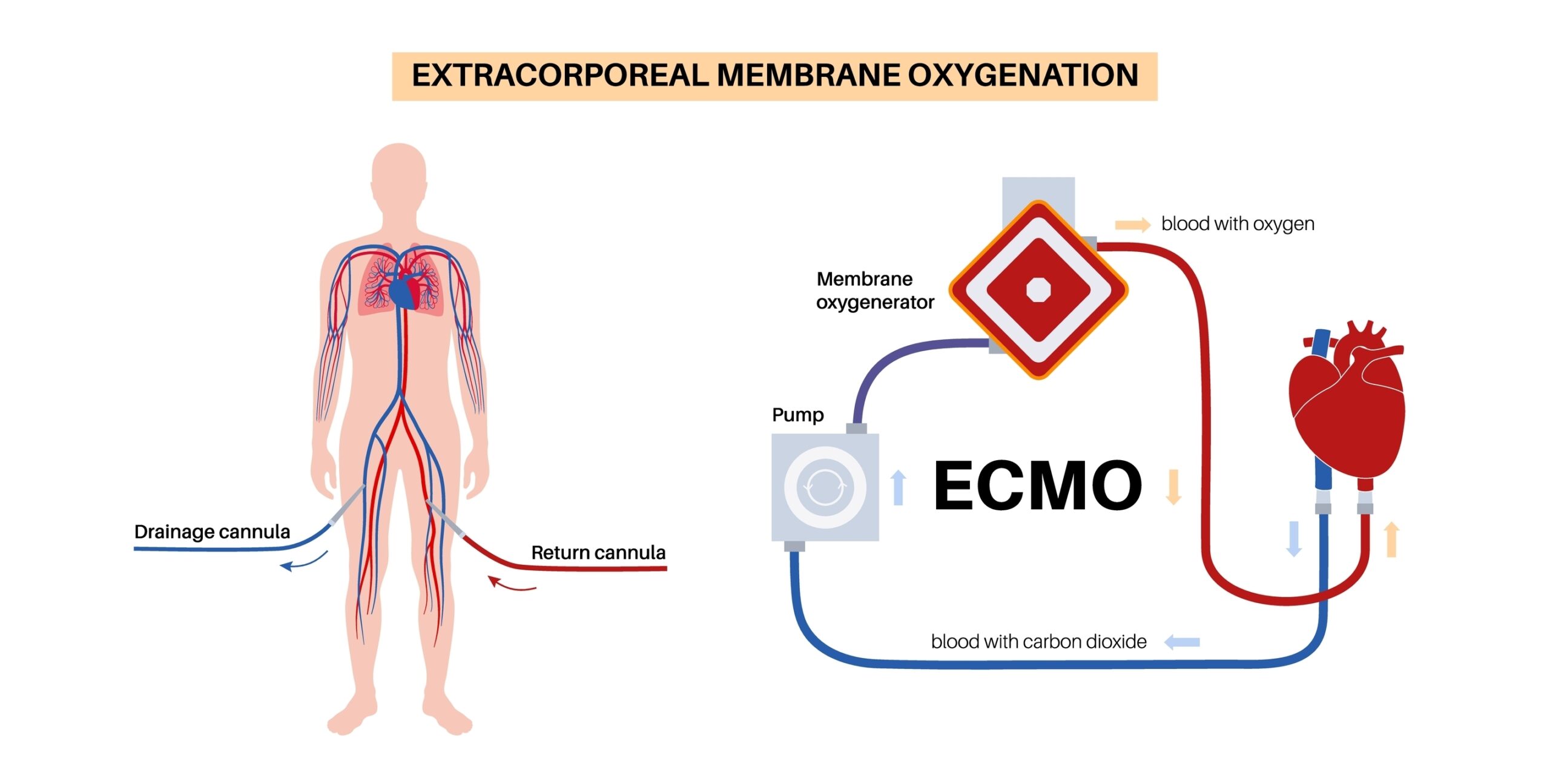
ECMO, short for Extracorporeal Membrane Oxygenation, is a machine based life support system used in intensive care for patients with severe heart or lung failure. The word extracorporeal means outside the body, and that is exactly what happens: the patient's blood is guided out of the body, through a machine that does the work of the lungs (and sometimes the heart), and then back in.
It is one of the highest levels of organ support in modern medicine, sitting above the ventilator and medication. ECMO does not treat the disease itself. Its role is to keep the body supplied with oxygen and blood flow while the underlying problem is treated and the organs are given a chance to recover.
How does ECMO work?
ECMO works by continuously circulating the patient's blood through an artificial lung, called an oxygenator. Thin tubes, known as cannulae, are placed into large blood vessels. Blood is drawn out, passed through the oxygenator where oxygen is added and carbon dioxide is removed, and then pumped back into the body. This means the patient's own lungs, and sometimes the heart, can rest instead of struggling.
Because the machine takes over gas exchange, doctors can ease off aggressive ventilator settings that might otherwise cause further lung injury. The patient stays connected to ECMO continuously, often for days or weeks, monitored around the clock by a specialised team until their own organs are strong enough to take over again.
Types of ECMO: VV and VA
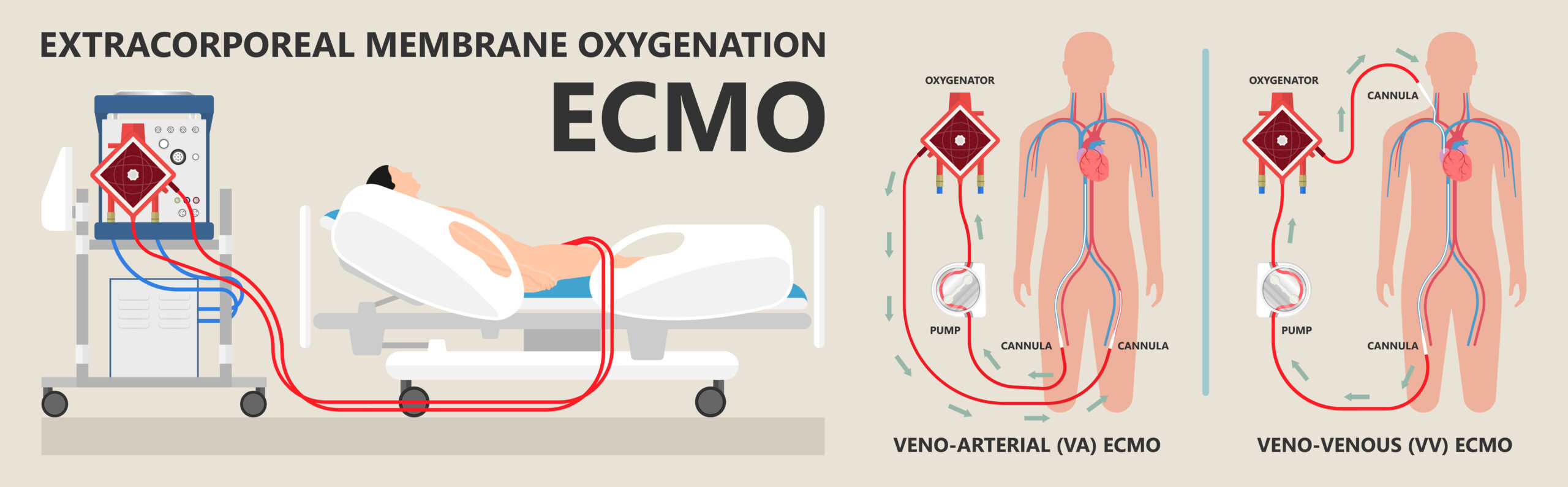
There are two main types of ECMO, and the right one depends on whether the problem is with the lungs alone or with the heart as well. Both work on the same principle but are connected to the body differently.
- VV ECMO (veno venous) Supports the lungs only, in patients whose heart is still working. Blood is taken from and returned to the veins. It is used mainly for severe respiratory failure, such as serious pneumonia or ARDS.
- VA ECMO (veno arterial) Supports both the heart and the lungs. Blood is returned to an artery, so the machine also maintains circulation. It is used when the heart cannot pump effectively, for example in severe cardiac failure or cardiogenic shock.
When is ECMO used?
ECMO is considered when a patient's heart or lung failure is so severe that conventional intensive care, including the ventilator and medication, is no longer enough to keep them stable. Crucially, it is used when the underlying problem is thought to be reversible or treatable, so that ECMO can act as a bridge rather than an end in itself. Starting ECMO early in suitable patients is linked to better outcomes.
Common situations where ECMO may be considered include the following.
- Severe acute respiratory failure, such as ARDS from serious infection or inflammation
- Severe pneumonia not responding to a ventilator
- Lung injury from aspiration or chest trauma
- Severe cardiac failure or cardiogenic shock
- Support around certain high risk cardiac situations
- As a bridge to recovery, or to further definitive treatment
Who is ECMO for, and who is it not for?
ECMO is for carefully selected critically ill patients whose organ failure is severe but has a realistic chance of recovery. Patient selection is one of the most important parts of ECMO care, because the therapy is demanding and carries real risks. The treating team weighs the severity of the illness, whether it is reversible, and the patient's overall condition before starting.
It is generally not appropriate when the underlying condition cannot be reversed or treated, because ECMO supports the body but does not cure the disease. In those situations it would prolong support without offering a route to recovery. This is why the decision to start ECMO is always made by the specialist team, case by case.
What ECMO involves for the patient
A patient on ECMO is cared for in the intensive care unit and is connected to the machine continuously. They are usually sedated, especially in the early stages, and are closely monitored at all times. The cannulae in the blood vessels, the circuit, blood flow, oxygen levels and clotting are all watched and adjusted continuously by the team.
How long a patient stays on ECMO varies widely, from a few days to several weeks, depending on how quickly the underlying illness improves. Throughout this time the aim is to support the organs, treat the cause, and gradually reduce the machine's support as the patient's own heart and lungs recover.
Risks and what to expect
ECMO is a powerful therapy, and like any major intervention it carries risks. Because blood moves through an external circuit, bleeding and clotting problems are among the most common concerns, and there are risks relating to the cannulation sites, infection and blood flow. These risks are the reason ECMO is reserved for the most serious situations and is managed by an experienced team in a well equipped intensive care setting.
The team behind ECMO
ECMO is never a single machine or a single doctor. It depends on a coordinated team working around the clock: intensivists and critical care specialists, cardiac and cardio thoracic surgeons, cardiologists, pulmonologists, perfusionists who manage the circuit, and critical care nurses. Having this combined expertise, together with a fully equipped intensive care unit, is what allows a hospital to offer ECMO safely.
At Mar Sleeva Medicity Palai in Kottayam, ECMO support is provided through the critical care and Cardio Thoracic and Vascular Surgery teams as part of the hospital's advanced critical care services, so that this level of support is available closer to patients in the region.
Frequently asked questions
What does ECMO stand for?
Is ECMO the same as a ventilator?
What is the difference between VV and VA ECMO?
How long can a patient stay on ECMO?
Is ECMO a cure?
Who decides if a patient needs ECMO?
This article is for general information about ECMO (Extracorporeal Membrane Oxygenation) and is not a substitute for medical advice. Whether ECMO is appropriate for a patient is a clinical decision made by the treating team based on the individual situation.