




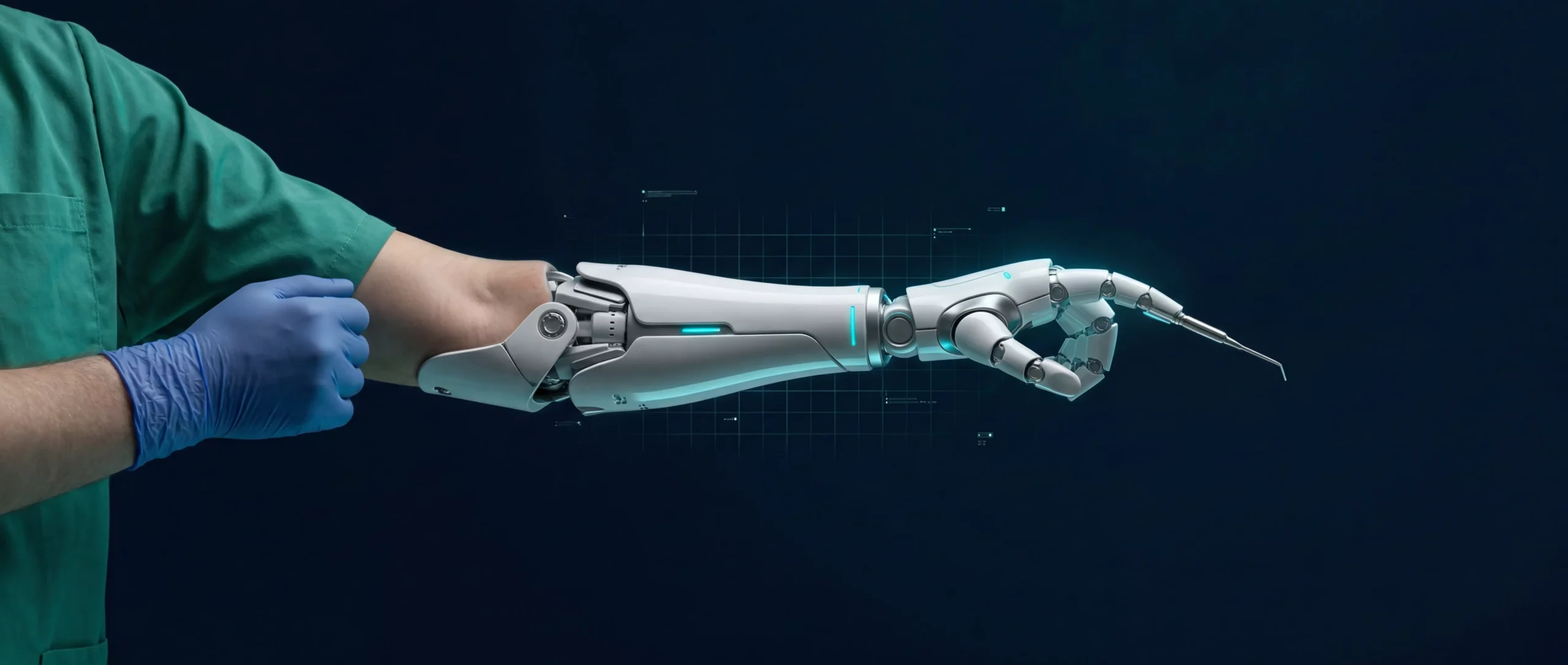
A landmark day for robotic knee replacement
In April 2026, the orthopaedic team at Mar Sleeva Medicity Palai completed 11 robotic-assisted knee replacement procedures in a single day. The day represents one of the most significant institutional milestones in robotic arthroplasty at the hospital. Seven patients were operated on, two VELYS robotic systems ran in parallel across the hospital’s operating theatres, and the day began at dawn.
For patients in Kottayam and across central Kerala, the milestone is a practical signal: robotic-assisted knee replacement at Mar Sleeva Medicity Palai is no longer an occasional procedure. It is now delivered at scale, with the team coordination, surgical experience, and equipment capacity to handle high volumes safely on a single day.
The numbers behind the day
Eleven knee replacement procedures were performed on seven patients. Four of those patients underwent bilateral knee replacement, meaning both knees were replaced on the same day, contributing eight of the eleven procedures. The remaining three patients underwent single-knee (unilateral) replacement. All eleven procedures used robotic assistance.
Inside the theatres: how the day unfolded
The operating schedule began before sunrise. Two VELYS robotic systems were prepared in separate theatres, allowing parallel procedures rather than back-to-back sequencing. The pre-operative planning for each patient had been completed in advance, with imaging data uploaded into the robotic system and surgical plans tailored to each knee’s individual anatomy.
Each procedure followed the same structured sequence. Anaesthesia induction. Patient positioning. Robotic registration to the patient’s bone landmarks using infrared cameras and optical trackers. Computer-assisted bone preparation. Implant trial. Soft-tissue balancing under real-time data feedback. Final implant fixation. Closure and transfer to recovery. The structured workflow, repeated eleven times in one day, depends on the operating teams handling robotic arthroplasty as routine work rather than as exceptional procedures.
The surgical team
The day’s operating team was led by Dr. O.T George, Senior Consultant Orthopaedic Surgeon. The full roster included orthopaedic surgeons and the anaesthesiology lead working in coordination across both theatres.
Surgical and anaesthesia team
- Dr. O.T George — Senior Consultant, Orthopaedics (Lead surgeon)
- Dr. Nithin Thomas George — Orthopaedic Surgeon
- Dr. Manjith George — HOD, Anaesthesiology
- Dr. Anu Janardhanan — Senior Consultant
- Dr. James Cyriac — Senior Consultant
Behind the named surgeons stood the broader operating team: theatre nursing staff, anaesthesia technicians, implant logistics, post-operative ward staff, and the physiotherapy and rehabilitation unit ready to mobilise patients within hours of surgery. A single-day record of this scale depends on every link in that chain.
Why robotic-assisted knee replacement matters for patients
Robotic-assisted knee replacement uses pre-operative imaging data to plan each procedure in millimetre detail before the patient enters the theatre. During surgery, the robotic arm executes the surgeon’s plan under real-time guidance from infrared cameras and optical trackers, while the surgeon retains full control of every decision. Bone preparation is limited to exactly the surfaces planned. Implant alignment is verified against the patient’s individual anatomy. Soft-tissue balance is measured rather than estimated.
Compared with conventional knee replacement, robotic-assisted procedures are associated with several patient-centred benefits:
- Reduced post-operative pain
- Faster early mobilisation
- More precise implant alignment
- Less unintended soft-tissue disruption
- Improved chances of long-term implant survival
- More predictable recovery timeline
The VELYS robotic system at Mar Sleeva Medicity Palai
Mar Sleeva Medicity Palai performs robotic knee replacement using the VELYS robotic-assisted solution. The system integrates pre-operative imaging, intra-operative tracking, and computer-assisted execution into a single workflow. Each patient’s knee is mapped digitally before surgery, and the surgical plan is verified and adjusted intra-operatively based on the live data the system provides. The hospital’s dedicated robotic knee replacement programme covers patient assessment, surgical planning, the procedure itself, and post-operative rehabilitation.
Bilateral knee replacement explained
Bilateral knee replacement means both knees are replaced together. Patients who are good candidates typically have advanced arthritis affecting both knees, are medically fit for a longer anaesthesia event, and would otherwise face two separate surgeries spaced several months apart. The benefit is consolidated recovery: one hospital admission, one rehabilitation period, one set of post-operative restrictions. The trade-off is a more demanding immediate recovery, since both knees are mobilising at the same time.
The decision is individualised. Cardiac and respiratory fitness, age, weight, severity of arthritis in each knee, and the patient’s home support system all factor into whether bilateral surgery is the right choice. Four of the seven patients on this particular day were assessed as suitable candidates and chose the bilateral approach.
Building toward this day: 2,000+ knee replacements at Mar Sleeva
An eleven-procedure day does not happen in isolation. It reflects the cumulative experience of an orthopaedic programme that has performed over 2,000 knee replacement surgeries across robotic and conventional techniques. Each prior procedure refined the team’s pre-operative assessment protocols, implant selection, intra-operative workflow, and post-operative recovery pathways. Patients moving through the hospital’s joint replacement pathway today benefit from the standardisation that volume makes possible.
Joint replacement programme at Mar Sleeva Medicity Palai
The Department of Orthopaedics at Mar Sleeva Medicity Palai offers a full joint replacement programme covering knee, hip, shoulder, and elbow arthroplasty, both primary and revision. Robotic knee replacement is delivered through the VELYS programme, supported by laminar-flow operating theatres, modern implant systems, dedicated arthroplasty operating teams, and a physiotherapy and rehabilitation unit for early post-operative mobilisation. For more on Dr. O.T George’s clinical leadership and the broader April 2026 surgical volume, see our coverage of 132 joint replacements in a single month.
Consult our robotic knee replacement team
For evaluation and consultation on robotic-assisted knee replacement at Mar Sleeva Medicity Palai, Kottayam.
Frequently asked questions
What happened on the day Mar Sleeva Medicity Palai performed 11 robotic knee replacements?
In April 2026, the orthopaedic team at Mar Sleeva Medicity Palai completed 11 robotic-assisted knee replacement procedures in a single day. Seven patients were operated on. Four of those patients underwent bilateral knee replacement (both knees on the same day, contributing eight procedures) and three patients underwent single-knee replacement (contributing three procedures). The day began at dawn and used two VELYS robotic systems running in parallel across multiple operating theatres. The surgical team was led by Dr. O.T George, Senior Consultant Orthopaedic Surgeon, working with Dr. Nithin Thomas George, Dr. Manjith George (HOD, Anaesthesiology), Dr. Anu Janardhanan, and Dr. James Cyriac, along with the wider operating, anaesthesia, and rehabilitation team.
How many patients underwent robotic knee replacement that day?
Seven patients underwent robotic-assisted knee replacement on that single day, contributing a total of 11 procedures. Four patients underwent bilateral knee replacement, meaning both of their knees were replaced on the same day, accounting for 8 of the 11 procedures. The remaining three patients underwent single-knee (unilateral) replacement. All 11 procedures were performed using the VELYS robotic-assisted system at Mar Sleeva Medicity Palai. Each patient was individually assessed for suitability for robotic surgery and, where applicable, for the bilateral approach. The decision between single-knee and bilateral replacement was made based on each patient’s medical fitness, severity of arthritis in each knee, and home support for the more demanding immediate recovery that bilateral surgery requires.
What is bilateral knee replacement, and how is it different from single-knee replacement?
Bilateral knee replacement is a procedure in which both knees are replaced during the same operation, under a single anaesthesia event. Single-knee replacement, also called unilateral knee replacement, replaces only one knee at a time. Bilateral replacement is suitable for patients with advanced arthritis in both knees who are medically fit for a longer anaesthesia event and a more demanding immediate recovery. The benefit is consolidated recovery: one hospital admission, one rehabilitation period, and one set of post-operative restrictions instead of two separate surgeries spaced several months apart. The trade-off is that both knees are mobilising simultaneously, which can be more challenging in the first two to three weeks. The choice is individualised based on the patient’s cardiac and respiratory fitness, age, weight, and home support.
Who was on the surgical team for the 11 robotic knee replacements?
The single-day surgical team was led by Dr. O.T George, Senior Consultant Orthopaedic Surgeon at Mar Sleeva Medicity Palai. The full operating roster included Dr. Nithin Thomas George (Orthopaedic Surgeon), Dr. Manjith George (HOD, Anaesthesiology), Dr. Anu Janardhanan (Senior Consultant), and Dr. James Cyriac (Senior Consultant). Beyond the named surgeons and anaesthesiologist, the day depended on the broader operating ecosystem: theatre nursing staff, anaesthesia technicians, implant logistics, post-operative ward staff, and the hospital’s physiotherapy and rehabilitation unit. The robotic knee replacement programme at Mar Sleeva Medicity Palai is delivered as a multidisciplinary effort, and the eleven-procedure day reflects the maturity of the coordination between every link in that team.
What is the VELYS robotic system used at Mar Sleeva Medicity Palai?
VELYS is a robotic-assisted surgical solution designed for knee replacement procedures. The system integrates pre-operative imaging, intra-operative tracking, and computer-assisted execution into a single workflow. Before surgery, each patient’s knee anatomy is mapped digitally, and a personalised surgical plan is created. During surgery, infrared cameras and optical trackers maintain millimetre-level accuracy as the surgical team prepares the bone surfaces and positions the implant. Real-time data feedback allows the surgeon to verify implant alignment and soft-tissue balance against the patient’s individual anatomy and adjust the plan intra-operatively if needed. The surgeon retains full clinical control of every decision. Mar Sleeva Medicity Palai operates two VELYS robotic systems, which allowed parallel procedures across multiple theatres on the single-day record.
Is robotic-assisted knee replacement safer than conventional knee replacement?
Robotic-assisted knee replacement is associated with several measurable benefits compared with conventional knee replacement, including more precise implant alignment, less unintended soft-tissue disruption, reduced post-operative pain, faster early mobilisation, and a more predictable recovery timeline. These benefits stem from the system’s ability to plan and execute each step of the procedure based on the patient’s individual anatomy rather than on standard templates. That said, both robotic-assisted and conventional knee replacement remain established and effective procedures, and the right choice depends on the patient’s specific anatomy, severity of arthritis, age, activity goals, and overall health. An orthopaedic consultation evaluates these factors and recommends the most appropriate approach. Mar Sleeva Medicity Palai offers both options through its joint replacement programme.
How long does recovery take after robotic knee replacement?
Recovery after robotic-assisted knee replacement typically follows a structured pathway. Most patients begin supervised mobilisation within 24 hours of surgery and are discharged from hospital within 3 to 5 days for single-knee replacement, and slightly longer for bilateral replacement. The first 2 to 6 weeks focus on regaining range of motion, building quadriceps strength, and walking with a support aid. By 6 to 12 weeks, most patients walk independently and return to light daily activities. Full recovery, including return to most low-impact activities and sports, typically takes 3 to 6 months. Bilateral knee replacement involves a more demanding initial recovery but consolidates the overall timeline into a single rehabilitation period. Each patient’s recovery is individualised based on age, fitness, and adherence to the physiotherapy programme.
How many knee replacements has Mar Sleeva Medicity Palai performed in total?
Mar Sleeva Medicity Palai has performed over 2,000 knee replacement surgeries across robotic and conventional techniques. This cumulative experience is one of the foundations that made the single-day record of 11 robotic knee replacements possible. Each prior procedure has contributed to the refinement of the orthopaedic department’s pre-operative assessment protocols, implant selection, intra-operative workflow, and post-operative rehabilitation pathways. For patients evaluating where to undergo joint replacement surgery, the cumulative volume of the centre is one of the most documented indicators of clinical outcomes in arthroplasty literature. Higher-volume centres are consistently associated with lower complication rates, shorter length of hospital stay, and longer implant survival. The hospital’s orthopaedic programme covers primary and revision joint replacement of the knee, hip, shoulder, and elbow.
How do I book a robotic knee replacement consultation in Kottayam?
You can book a consultation for robotic-assisted knee replacement at Mar Sleeva Medicity Palai through three channels. Call the hospital enquiry desk on 04822 359 900, 354 900, or 269 700 to schedule an appointment. Book online through the hospital website at marsleevamedicity.com/book-an-appointment. Or use the Mar Sleeva Medicity Palai mobile app, available on the Apple App Store and Google Play Store, for outpatient appointment booking. Telemedicine consultations are also available for follow-up reviews and second opinions. The hospital is located at Kezhuvankulam P.O, Cherpunkal, Kottayam district, Kerala. The orthopaedic team will assess your symptoms, imaging, age, activity level, and overall health to recommend the most appropriate surgical approach, including whether robotic-assisted knee replacement is suitable for your case.